Sonnet CVI
When in the chronicle of wasted time
I see descriptions of the fairest wights,
And beauty making beautiful old rhyme,
In praise of ladies dead and lovely knights,
Then, in the blazon of sweet beauty's best,
Of hand, of foot, of lip, of eye, of brow,
I see their antique pen would have expressed
Even such a beauty as you master now.
So all their praises are but prophecies
Of this our time, all you prefiguring;
And for they looked but with divining eyes,
They had not skill enough your worth to sing:
For we, which now behold these present days,
Have eyes to wonder, but lack tongues to praise.
Other sonnets, such as 55, have looked forward to a time when the youth will live on through the verse of the poet: Sonnet 17 even considers that the record of the youth's outstanding beauty will not be believed by future generations:
Who will believe my verse in time to come,
If it were fill'd with your most high deserts?
This sonnet however looks back to a time when knights and ladies led lives of romance and mystery, a time which chroniclers have recorded.for posterity in descriptions which appear to foreshadow in some sense the youth's excelling beauty. The writers of past ages were aware, through some sort of divination, of a beauty that surpassed all others. Yet they did not know the youth, who was not yet born. Their songs therefore were mere prefigurings of his worth and glory, which now is appreciated, even though the present day poets lack the skill to sing of him adequately.
Some echoes of the following sonnet of Samuel Daniel are perhaps discernible here (as indeed in others of the Shakespearean sequence). This sonnet was No 50 in the Sonnets to Delia, published in 1594. (No. 46 in the 1592 edition).
Let others sing of knights and paladins
In aged accents and untimely words,
Paint shadows in imaginary lines,
Which well the worth of their high wits records:
But I must sing of thee and those fair eyes
Authentic shall my verse in time to come;
When yet the unborn shall say, 'Lo, where she lies!
Whose beauty made him speak, that else was dumb!'
These are the arks, the trophies I erect,
That fortify thy name against old age;
And these thy sacred virtues must protect
Against the dark and times consuming rage.
Though th'error of my youth they shall discover,
Suffice they show I lived and was thy lover!
The 1609 Quarto Version

WHen in the Chronicle of waſted time,
I ſee diſcriptions of the faireſt wights,
And beautie making beautifull old rime,
In praiſe of Ladies dead,and louely Knights,
Then in the blazon of ſweet beauties beſt,
Of hand,of foote,of lip,of eye,of brow,
I ſee their antique Pen would haue expreſt,
Euen ſuch a beauty as you maiſter now.
So all their praiſes are but propheſies
Of this our time,all you prefiguring,
And for they look'd but with deuining eyes,
They had not ſtill enough your worth to ſing :
For we which now behold theſe preſent dayes,
Haue eyes to wonder,but lack toungs to praiſe.
Commentary
- 1. When in the chronicle of wasted time
-
chronicle - chronicles were written
historical records of past times, compiled by a 'chronicler', who was
often
a monk. Examples are the Anglo-Saxon chronicle, and Bede's 'History of
the
Church of England'. Shakespeare relied heavily on Holinshed's Chronicle
History of England (first published 1577) for many of his history
plays.
There were other chronicles of English history which Shakespeare would
probably
also have in mind in this reference, most notably John Stow's "Annales,
or a General Chronicle of England from Brute unto this present year of
Christ,
1580", published in 1580, with other editions in 1592, 1601 and 1605.
wasted time = time which is past, hence destroyed, wasted. A reversal of the normal expression, Time the destroyer. waste derives from the Latin word, vastare, to lay waste in warfare, to destroy. Time in its progress figuratively creates deserts of forgotten people and nations. - 2. I see descriptions of the fairest wights,
wights = men and women. (OED.2). An archaic word even in Shakespeare's time, though favoured by Spenser. Shakespeare uses it in Gower's speech in Pericles, Gower being the type of archaic poet (c.1330-1408):
That whoso asked her for his wife,
His riddle told not lost his life.
So for her many a wight did die, Per.Prologue.37-9.
the fairest wights = the most beautiful men and women. We can assume that even in Shakespeare's day the age of chivalry seemed far distant and was peopled imaginatively with men and women of extraordinary beauty and fabulous costumes.- 3. And beauty making beautiful old rhyme,
- The descriptions of the beauty of old times beautifies the verse of the old chronicles. The earliest chronicles were written in verse, and were probably recited at gatherings accompanied by music.
- 4. In praise of ladies dead and lovely knights,
- dead - refers both to the ladies and lovely knights. Emphasises that they all lived long ago.
- 5. Then, in the blazon of sweet beauty's best,
- blazon
= emblazoning, A description,
painting, or record of any kind; esp. a record of virtues or
excellencies.
(OED.4). The term is heraldic, and to emblazon was to adorn something
with
heraldic devices, or with descriptions.
sweet beauty's best = the best of all beautiful things (persons), both in the sense of the best parts of them, and the most choice examples from among them. - 6. Of hand, of foot, of lip, of eye, of brow,
A further description of the blazon of sweet beauty - hands, feet, lips, eyes, brows could all be singled out for special mention. These are also of course the parts the attributes of which are most praised by sonneteers. See for example 130:
My mistress' eyes are nothing like the sun etc.- 7. I see their antique pen would have expressed

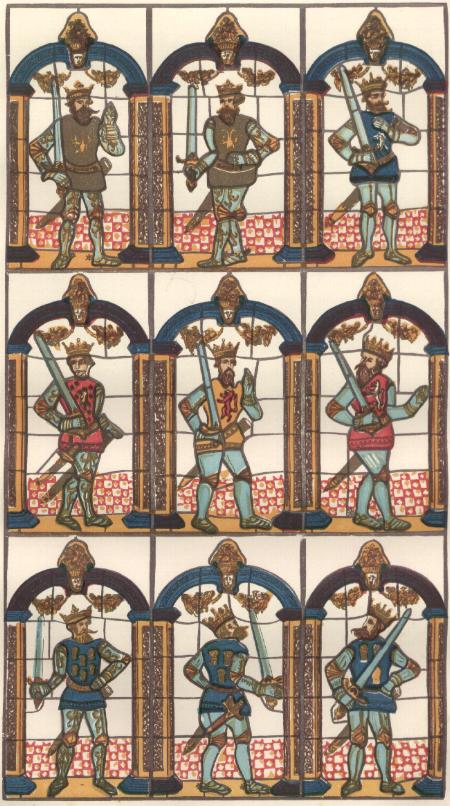
Venice AD 1338. From a manuscript in the Bodleian Library. Bod Misc 264.
their antique pen = the style and subject matter of the writers of the ancient chronicles.
would have expressed = would potentially, if they were to be writing now, portray you etc.; would have described you, if you were alive then.
antique in addition to the meaning of 'ancient and old-fashioned' also had overtones of 'fantastic, ludicrous and grotesque'. (Onions 1986, pp. 8-9).
The implication of lines 1-8 seems to be: 'The poets of old who wrote the chronicles were much better at portraying beauty than present day writers, and would have made a far better job of describing you than any modern writer. That is apparent from a reading of the blazons of beauty that they have left us. Had our lovely youth been alive in those times, with the beauty he now has, they would have risen wonderfully to the challenge of describing him'.expressed = described, portrayed. See the previous sonnet:
Therefore my verse to constancy confined,
One thing expressing, leaves out difference.- 8. Even such a beauty as you master now.
- master = possess, have in one's control.
- 9. So all their praises are but prophecies
- their praises = the chroniclers' praise of beautiful people. Insofar as they praised beautiful people then living, they were mistaken, for their praise really related to you, although you were not then alive. Consequently all their praises were prophetic of your beauty, which now exists, but was not available at the time to them, even though they praised the semblance of it.
- 10. Of this our time, all you prefiguring;
- See the line above. Their descriptions of beauty were prefigurations of your beauty.
- 11. And for they looked but with divining eyes,
- for they looked but with = because
they only looked with
divining eyes = eyes which look into the future
9-11 SB sees in these lines a possible identification of the beautiful youth with Christ - 12. They had not skill enough your worth to sing:
- skill - this is an emendation of Q's still. It is widely accepted, although still has been defended. If it is retained one probably has to understand some additional word such as 'knowledge' or 'understanding' to complete the meaning. 'They still lacked the necessary understanding to sing of your true worth'. Endorsement of skill is found in two early manuscript copies of this sonnet. (See JK. p.443).
- 13. For we, which now behold these present days,
- For
we - this has the meaning of
'but we', since it contrasts the awareness of the present age with the
myopia
of the past.
which = who - 14. Have eyes to wonder, but lack tongues to praise.
Although we wonder at your beauty, we lack the poetic talent to sing of it adequately. The poet modestly belittles his own efforts, but the poem itself seems to contradict what he here declares.