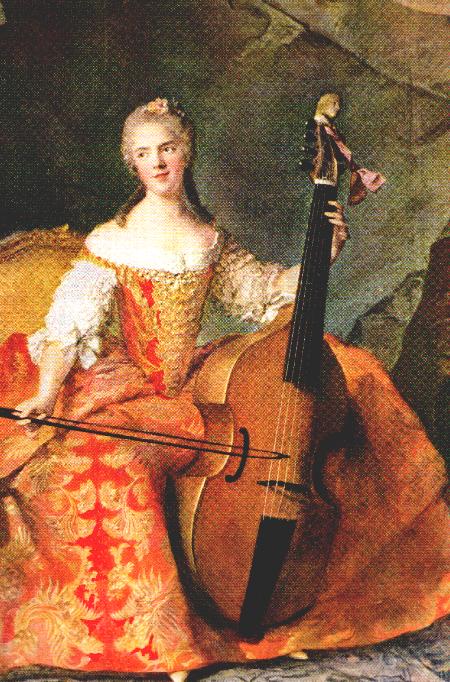
Sonnet VIII
Music to hear, why hear'st
thou music sadly?
Sweets with sweets war not, joy delights in joy:
Why lov'st thou that which thou receiv'st not gladly,
Or else receiv'st with pleasure thine annoy?
If the true concord of well-tuned sounds,
By unions married, do offend thine ear,
They do but sweetly chide thee, who confounds
In singleness the parts that thou shouldst bear.
Mark how one string, sweet husband to another,
Strikes each in each by mutual ordering;
Resembling sire and child and happy mother,
Who, all in one, one pleasing note do sing:
Whose speechless song being many, seeming one,
Sings this to thee: 'Thou single wilt prove none.'
The 1609 Quarto Version

MVſick to heare,why hear'ſt thou muſick ſadly,
Sweets with ſweets warre not ,ioy delights in ioy:
Why lou'ſt thou that which thou receauſt not gladly,
Or elſe receau'ſt with pleaſure thine annoy ?
If the true concord of well tuned ſounds,
By vnions married do offend thine eare,
They do but ſweetly chide thee , who confounds
In ſingleneſſe the parts that thou ſhould'ſt beare:
Marke how one ſtring ſweet husband to an other,
Strikes each in each by mutuall ordering;
Reſembling ſier,and child, and happy mother,
Who all in one,one pleaſing note do ſing:
Whoſe ſpeechleſſe ſong being many,ſeeming one,
Sings this to thee thou ſingle wilt proue none.
Commentary
- 1. Music to hear, why hear'st thou music sadly?
- Two interpretations are given of this: a) You are yourself like music to listen to, so why do you respond to it sadly? b) Why is it that, when there is music to listen to, you are saddened by it.? The former question asks why a person who is so framed as to appear perfect to the observer, rounded and harmonious as a piece of music, should be made sad by listening to music.
- 2. Sweets with sweets war not, joy delights in joy:
- Sweet (things) and joy are inherently harmonious, they do not fight against themselves. The construction of these first two lines is consciously melodic. Musis music, sweets sweets, joy joy. A slight air of disharmony sets in with lines 3 and 4, with 'receiv'st not glady, receiv'st thine annoy'.
- 3. Why lov'st thou that which thou receiv'st not gladly,
- Why do you love the music that you listen to (receive), even though it does not give you pleasure?
- 4. Or else receiv'st with pleasure thine annoy?
- Do you take
delight in that which causes you pain?
annoy = that which annoys or irks you, annoyance. Probably a sexual innuendo is present in these two lines (3-4), based on the words 'receiv'st' and 'pleasure'. - 5. If the true concord of well-tuned sounds,
- 5-8. A two fold idea runs through this sentence, that of sounds united in harmony (by unions married) and that of souls united in married bliss. Hence the sweet harmony of music reprimands him because he destroys, by remaining single, the harmony which would accompany him as a married man, and also he destroys the concord of music by not playing his part.
- 6. By unions married, do offend thine ear,
- unions = marriages, harmonies, counterpoint.
The term seems to have a musical connotation, that of sounds united in
harmony
although OED does not give any musical definition for union.
The
closeness of the word to unison does however keep
the musical imagery
at the forefront of one's mind. Shakespeare only uses the word
infrequently,
six times in total, two of which, in Hamlet, relate to the meaning
'pearl'.
offend = vex, displease, cause discomfort to. - 7. They do but sweetly chide thee, who confounds
They = the concord of sounds, the musical notes.
sweetly chide = gently criticise or reprimand.
confounds = destroys, mixes together in confusion. From the Latin confundere 'to pour together'.- 8. In singleness the parts that thou shouldst bear.
- the parts that thou shouldst bear = the parts you should play in married life, or, using the musical imagery, in music, by playing an instrument. A large number of connected meanings interplay in these two lines. 'As a player, or as a singer, you ruin the harmony, by attempting to play solo, by mistaking and miscuing the parts of the melody or song; while as a single man you abuse your parts by not mingling them, as you should, so that they bear fruit (children). You should bear the part of a father, while the chosen she will bear your children.
- 9. Mark how one string, sweet husband to another,
- 9-12 The musical image continues, with the addition of the idea of marriage in the word husband. The reference here is probably to the strings of a lute, which were strung in pairs, known as courses. It was the most commonly used musical instrument of the period, already having had a long history. Much music was written for it, and Shakespeare would have been familiar with it. The double strings provide a richer tone, as they reverberate in harmony. The use of courses is not however restricted to lutes, as mandolins, guitars and theorbos were also set with them.
- 10. Strikes each in each by mutual ordering;
- The strings
reverberate against each other. They mutually respond, in appropriate
order.
each in each = ?? each string in each course. Only adjacent strings in the same course could physically strike each other.
mutual ordering - this could refer to the positioning and sequential movement of the fingers, or it could be a reference to the ordered harmony of the music. - 11. Resembling sire and child and happy mother,
- The strings, in their mutual harmony, resemble a happy family. There is a sideways glance here at the Holy Family, Mary, Jesus and Joseph, who would have been depicted in numerous church paintings of the time. They were the archetype of the well ordered family. See the illustration above.
- 12. Who, all in one, one pleasing note do sing:
- The father, child and mother are united in harmony, as the strings of the lute produce a harmonius tune.
- 13. Whose speechless song being many, seeming one,
- The song is instrumental, composed of many strings and notes, hence speechless, but it is a unity in its harmony. Although polyphonic its melodic line seems to be 'one', a unity.
- 14. Sings this to thee: 'Thou single wilt prove none.'
Being single you will be effectively nothing.
prove = turn out to be, become. The number one was considered proverbially to be equivalent to nothing (perhaps in the context of very large numbers). As in Sonn 136:
In things of great receipt with ease we prove
Among a number one is reckon'd none:
There is also the meaning 'You will turn out to be neither song, nor note, nor harmony, nor happy family'.